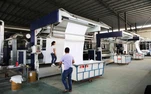
In the process of using the stenter setting machine, the quality of the fabric can be further improved through soft processing to make it meet the requirements of customers. In addition, it can make it not easy to scratch on the cloth guide wheel. In addition, the use of stenter setting machine equipment can also help to keep the fabric surface flat and stable in size, and can also eliminate wrinkles and creases formed during the dyeing and finishing process.
It should be noted that, in order to achieve such an ideal effect, in the process of operating the stenter setting machine, it is necessary to reasonably formulate suitable setting process conditions. First of all, the setting temperature is generally determined with reference to the elastic shrinkage rate and thickness of the fabric. If the set temperature is too high, the strength will decrease, the elasticity will decrease, and the fabric may change color. On the contrary, if the temperature is too low, it will cause fabric curling, unstable width and large shrinkage.
The second is to reasonably control the speed of the stenter setting machine equipment. Under normal circumstances, its operating speed mainly depends on the length of the shaping zone and the level of shaping temperature. If the speed is too fast, it will affect the shaping effect, and may also cause the fine wrinkles in the dyeing and finishing process to not be removed. On the contrary, if the vehicle speed is slow and the temperature is high, it may cause yellowing of the fabric and decrease in elasticity.
In addition to the above two conditions, another process parameter that needs to be reasonably controlled is the overfeeding of the stenter setting machine equipment. Generally, after determining the fabric width, it is necessary to set the appropriate overfeed amount and tension.
It should be noted that during the operation of the stenter setting machine, the selection of this parameter will affect the weight, elasticity, and wrinkles of the fabric. For example, if the fabric tension is small, the overfeed is large, and the fabric surface is uneven, it is difficult to eliminate the fine wrinkles produced during the dyeing process. Conversely, high tension and small overfeeding will cause curling during heat setting.